


 中文简体
中文简体 ผู้เขียน: ผู้ดูแลระบบ วันที่: 2026-04-13
3 Phase vs Single Phase Induction Motors: Key Differences
Understanding the Core Difference Between the Two Motor Types
Induction motors are the most widely used type of electric motor in both industrial and domestic settings, operating on the principle of electromagnetic induction where the rotor is driven by a rotating magnetic field generated in the stator windings. The fundamental distinction between a three phase induction motor and a single phase induction motor lies in the nature of the electrical supply that powers them. A three phase motor receives three separate alternating current waveforms, each offset by 120 degrees from the others, which together produce a naturally rotating magnetic field in the stator. A single phase motor receives only one alternating current waveform, which generates a pulsating rather than rotating magnetic field — a characteristic that requires additional starting mechanisms and results in notably different performance characteristics across a range of operational parameters.
Choosing between these two motor types is not simply a matter of available power supply. It involves evaluating power output requirements, starting torque needs, operating efficiency, installation environment, maintenance capacity, and total cost of ownership over the motor's working life. Each type has a distinct set of strengths and limitations that make it more or less suitable for specific applications.
How Each Motor Type Generates and Sustains Rotation
In a three phase induction motor, the three-phase supply creates a continuously rotating magnetic field in the stator at a speed determined by the supply frequency and the number of pole pairs in the motor — known as the synchronous speed. This rotating field induces currents in the rotor conductors, which in turn generate a magnetic force that drives the rotor to follow the rotating field. Because the rotating magnetic field is produced naturally by the phase relationship of the three supply voltages, the motor is inherently self-starting and requires no additional starting components under normal operating conditions.
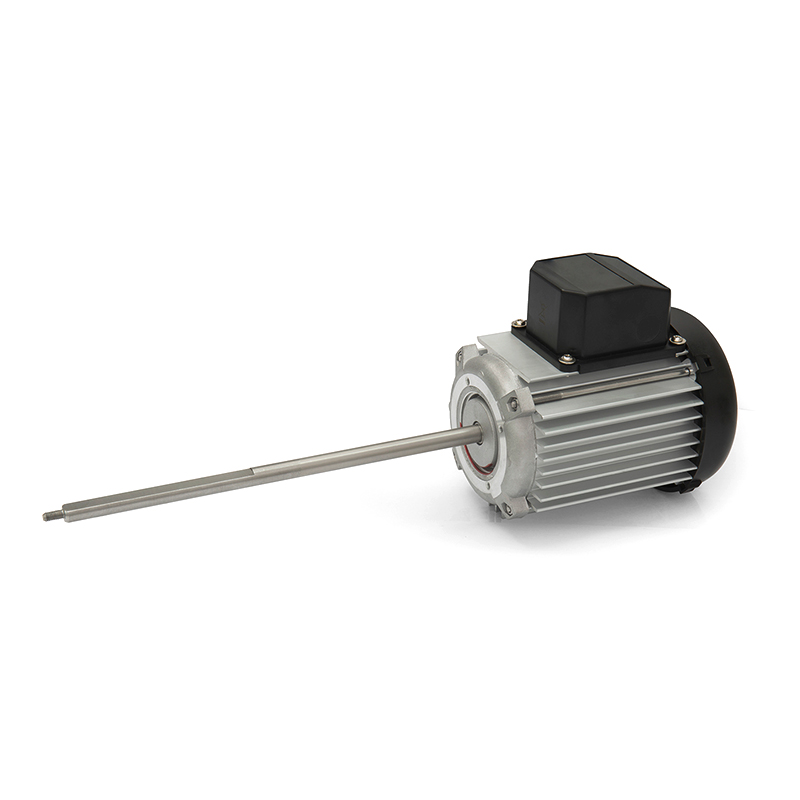
In a single phase induction motor, the single alternating current supply produces a pulsating magnetic field that oscillates back and forth along a single axis rather than rotating. This pulsating field alone cannot produce starting torque, which means the rotor will not begin rotating on its own when connected to a single phase supply at standstill. To overcome this limitation, single phase induction motors incorporate auxiliary starting mechanisms. The most common approaches include capacitor-start motors, which use a start capacitor in series with an auxiliary winding to create a phase shift and simulate a rotating field during starting; capacitor-run motors, which maintain the capacitor in circuit during running for improved power factor; and shaded pole motors, which use a copper shading band on the stator pole to create a minor phase displacement sufficient to start small loads.
Power Output and Torque: A Direct Comparison
Three phase induction motors deliver significantly higher power output than single phase motors of equivalent physical size. The continuous rotating magnetic field produced by the three phase supply enables smooth, consistent torque delivery throughout each revolution of the rotor. This results in stable operation under varying load conditions, high starting torque capability — particularly in wound rotor or special design variants — and the ability to drive heavy mechanical loads reliably over extended operating periods.
Single phase induction motors are inherently limited in the power they can practically deliver. The pulsating magnetic field produces torque ripple — periodic fluctuations in the turning force applied to the rotor — that limits smooth operation at higher power levels and causes vibration in larger frame sizes. For this reason, single phase induction motors are rarely manufactured in ratings above 3 to 5 kilowatts for continuous duty applications. Their starting torque is also lower than equivalent three phase designs, making them unsuitable for loads that require high torque at startup, such as compressors, conveyors, and heavy pumps.
Efficiency and Power Factor Differences
Three phase induction motors operate at significantly higher efficiency levels than comparable single phase motors. The balanced three phase supply minimizes electrical losses in the stator windings, and the absence of auxiliary starting components eliminates the additional copper and iron losses associated with those elements. Well-designed three phase motors routinely achieve full-load efficiencies between 88% and 96%, depending on their size and design class. High-efficiency three phase motors designed to IE3 or IE4 international efficiency standards push these figures even higher, delivering meaningful energy cost savings over the motor's operating life.
Single phase motors are inherently less efficient, primarily because the auxiliary windings and starting capacitors consume additional power and introduce losses that are not present in three phase designs. Full-load efficiencies for single phase induction motors typically range between 60% and 75% for smaller units, with larger capacitor-run designs achieving somewhat higher figures. The power factor of single phase motors is also generally lower than three phase equivalents, meaning they draw more reactive current from the supply for the same useful power output, which increases supply current requirements and associated wiring costs.
Side-by-Side Technical Comparison
| Parameter | 3 Phase Induction Motor | Single Phase Induction Motor |
| Power Supply | 3-phase AC (typically 380V–415V) | Single phase AC (typically 110V–240V) |
| Self-Starting | Yes — no starting aid required | No — requires auxiliary starting mechanism |
| Power Range | 0.37 kW to several MW | Typically below 3–5 kW |
| Efficiency | 88%–96% (full load) | 60%–75% (full load) |
| Starting Torque | High — suitable for heavy loads | Low to moderate — limited to light loads |
| Torque Smoothness | Smooth and consistent | Pulsating — causes vibration at higher power |
| Construction Complexity | Simpler — no starting components needed | More complex — capacitors or shading coils required |
| Maintenance Requirements | Lower — fewer components to service | Higher — capacitors require periodic replacement |
| Typical Applications | Industrial machinery, pumps, compressors, fans | Household appliances, small tools, HVAC fans |
| Supply Availability | Industrial and commercial premises | Domestic and light commercial premises |
Construction and Maintenance Considerations
From a construction standpoint, the three phase induction motor is actually simpler in its internal arrangement than many single phase designs. Because the three phase supply naturally produces a rotating magnetic field, the stator requires only three sets of main windings with no auxiliary winding, centrifugal switch, or capacitor. The rotor in the most common squirrel cage design consists of aluminum or copper conductors cast into slots in a laminated iron core — a robust, low-maintenance construction with no brushes, slip rings, or contacts requiring regular service. The result is a motor that is mechanically straightforward, highly reliable, and capable of operating for many thousands of hours between scheduled maintenance intervals.
Single phase induction motors, by contrast, incorporate additional components that introduce potential failure points. Capacitor-start motors use a centrifugal switch that disconnects the start capacitor once the motor reaches approximately 75% of synchronous speed. This switch is a mechanical component subject to wear and occasionally to failure — either failing to open (which overheats the start capacitor) or failing to close on restart (which prevents the motor from starting). Capacitors themselves have a finite service life and can fail, particularly if the motor is subjected to frequent starts or operates in high-temperature environments. Maintenance programs for single phase motors should include periodic inspection and capacitor testing to catch degradation before it results in motor failure.
Typical Applications for Each Motor Type
Where Three Phase Induction Motors Excel
- Industrial Pumps and Compressors: High starting torque and continuous duty capability make three phase motors the standard choice for water supply pumps, hydraulic power units, and air compressors in manufacturing facilities.
- Conveyor and Material Handling Systems: The smooth, consistent torque of three phase motors ensures reliable operation of conveyor belts, hoists, and lifting equipment under variable load conditions.
- Machine Tools: CNC machining centers, lathes, milling machines, and grinding equipment rely on three phase motors for precise, high-power drive with consistent speed regulation.
- HVAC Systems in Commercial Buildings: Large air handling units, chillers, and cooling tower fans use three phase motors for their efficiency and reliability at higher power ratings.
- Agricultural Equipment: Irrigation pumps, grain handling conveyors, and processing equipment on farms connected to three phase rural supply networks use these motors extensively.
Where Single Phase Induction Motors Are the Practical Choice
- Household Appliances: Washing machines, refrigerators, air conditioners, and dishwashers all use single phase induction motors because they operate from standard domestic single phase supply.
- Small Power Tools: Bench grinders, drill presses, band saws, and similar workshop tools in domestic or light trade settings operate effectively on single phase motors within their power range.
- Fans and Ventilation: Ceiling fans, exhaust fans, and small HVAC fan coil units use shaded pole or capacitor-run single phase motors for their low-cost, low-maintenance operation at modest power levels.
- Small Water Pumps: Domestic water pressure pumps and garden irrigation pumps operate from single phase supply and are well served by capacitor-start single phase motors within their power range.
- Remote and Off-Grid Locations: Where only single phase supply is available — such as rural properties, small retail units, or temporary site installations — single phase motors provide a practical solution for light-duty motor applications.
Cost Comparison: Purchase Price vs Long-Term Operating Cost
The initial purchase price of a single phase induction motor is generally lower than a three phase motor of equivalent power rating, partly because the market for single phase motors is driven by high-volume domestic appliance production, and partly because the lower power ratings involved require smaller quantities of copper and iron. For domestic users or small workshops where only single phase supply is available, this lower entry cost is significant.
However, over a full operating life, three phase induction motors consistently deliver lower total cost of ownership in applications where three phase supply is available. Their higher efficiency reduces electricity consumption — a saving that compounds significantly for motors running continuously over months and years. Their simpler construction and absence of capacitors and centrifugal switches reduces maintenance costs and unplanned downtime events. And their longer service life before rewinding or replacement is needed further supports the economic case for three phase motors wherever the supply infrastructure exists to support them.
Making the Right Choice for Your Application
The decision between a three phase and single phase induction motor is, in many cases, determined primarily by the power supply available at the installation site. Where three phase supply is accessible, three phase motors are almost always the superior choice for power ratings above 1 kilowatt — delivering better efficiency, smoother operation, higher reliability, and lower lifecycle costs. Where only single phase supply is available, single phase motors provide a practical and cost-effective solution for the light-duty and domestic applications they are designed to serve.
For applications at the boundary between the two — small workshops or light commercial premises where the load requirement is approaching the upper limit of practical single phase motor ratings — it is worth evaluating whether investing in a three phase supply connection would deliver sufficient long-term savings in energy, maintenance, and motor replacement costs to justify the infrastructure investment. In many cases, particularly for businesses with multiple motors or extended daily operating hours, the economics of upgrading to three phase supply are compelling and repay the initial cost within a relatively short period of operation.

-
ข้อเสนอแนะ
สินค้าที่เกี่ยวข้อง


Copyright© Hengye Intelligent Drive (Hangzhou) Co. , Ltd. สงวนลิขสิทธิ์

สายด่วน:0086-15869193920
เวลา:0:00 - 24:00 น
